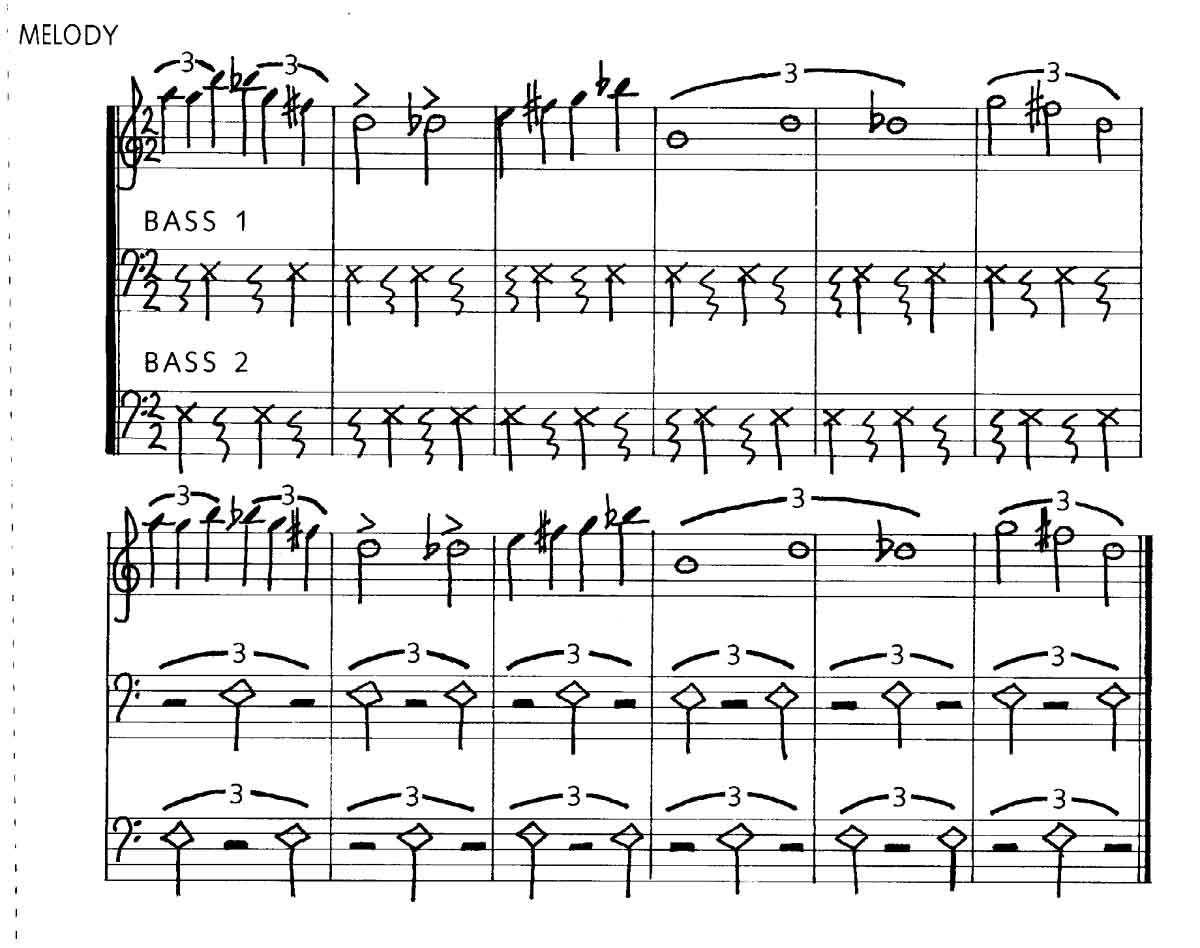
This piece is an example of composing directly from the Rhythm Tree. The melodic line was suggested by the rhythmic groupings: the pitches were arrived at after having made the rhythmic choices.
Although the rhythms are constantly changing, the underlying feel is of a slow two beats per bar. The melody is a 6 bar pattern, repeated to make a 12 bar line. The rhythm parts are interlocking, 'sharing' a simple 12 bar line, which falls into two 6 bar phrases.
I THE rhythms of the melody are as follows: SIX over TWO (bar 1): TWO over TWO (bar 2): FOUR over TWO (bar 3): slow THREE under TWO (bars 4 & 5): THREE over TWO (bar 6)
II THE rhythmic pattern of the accompaniment is: FOUR over TWO (bars 1 to 6): THREE over TWO (bars 7 to 12). The pattern is shared between the two parts (see score).
III IT is a good idea to get everyone to sing, play or clap all the parts to familiarise themselves with the piece as a whole, and to recognise the difference in feel as the rhythm parts change.
IV THE pitches of the rhythm parts are selected by the players themselves, bearing the melody in mind.
PERFORMING 'ALL PURPOSE'
After playing through the tune, the melodic line could be played at half speed (lasting 12 bars instead of 6). This could be used as a backing line for the soloists. Using the rhythmic structure of 6 bars of FOUR over TWO and 6 bars of THREE over TWO set up by the rhythm lines, solos may be taken, paying special attention to the sort of rhythmic choices suggested by the melody (and the Rhythm Tree).
Another idea to stretch the melody instruments is to stagger their entries to make a 'round'. That is, someone starts playing the melody alone, the second melody player enters a bar later (playing the same 6 bars) and so on. This is a similar process to that in the 'Numbers' piece.
note: this graphic is shown half size, so can be cut and pasted into another application if you need to print it out bigger.